📌 Key Takeaways
- 2026 is AST SpaceMobile’s first real revenue year: guidance of $150–200 million against more than $1.2 billion in contracted commitments, with FCC approval for US commercial operation secured in April
- The constellation stands at 10 operational Block-series satellites — after losing one to a launch failure in April — against a 45–60 year-end target that defines the viability question
- The model rents rather than builds a customer base: 50+ mobile operator partners with reach into nearly 3 billion subscribers, paying through revenue share and prepayments
- The threat that matters is not physics — Block 2 arrays close the link — but Starlink’s spectrum-owning D2C flank and AST’s own manufacturing cadence
In April 2026 the FCC approved AST SpaceMobile’s BlueBird constellation for commercial operation in the United States — the regulatory event the company had been architected toward since 2017. The AST SpaceMobile direct to cell thesis has always been simple to state and brutal to execute: put antennas in orbit large enough that ordinary smartphones need no modification, then sell coverage through the mobile operators who already own the customers. This year, for the first time, the thesis has revenue guidance attached: $150–200 million for 2026, roughly half of it already sitting in contracted backlog.
On this page
- From Midland to Orbit: The Pure-Play Bet
- The Technology: Why the Arrays Are Enormous
- The Constellation: Ten Satellites and a Steep Year
- The Business Model: Renting Three Billion Subscribers
- AST SpaceMobile Direct to Cell: The Viability Math
- Risks: Cadence, Capital, and the Spectrum-Owning Rival
- Industry Implications
- What to Watch
This profile works through the technology that makes the link close, the constellation math between 10 satellites and 45–60, the business model that rents 3 billion subscribers instead of acquiring them, and the honest viability assessment — including the competitor that just bought $17 billion of spectrum to attack the same market from the opposite direction.
From Midland to Orbit: The Pure-Play Bet
Founded in 2017 and headquartered in Midland, Texas, AST SpaceMobile spent its first years as the industry’s most audacious single-purpose bet: no diversification, no fallback product — direct-to-device or nothing. The BlueWalker 3 test satellite validated the giant-array approach in 2022 — and, by briefly becoming one of the brightest objects in the night sky, put the company permanently on astronomers’ watchlists, an operational-diplomacy burden it shares with every large-array operator. Five Block 1 BlueBirds launched in September 2024 proved service; the Block 2 generation now flying is the commercial article. It remains one of only two meaningful pure-play D2D public equities, which is why its stock trades as the sector’s sentiment gauge — rallying on regulatory approvals and launch resets, and repricing the entire direct-to-device thesis with each quarterly disclosure. [INTERNAL LINK: LEO satellite connectivity market → where the specialists fit in the four-group landscape]
The Technology: Why the Arrays Are Enormous
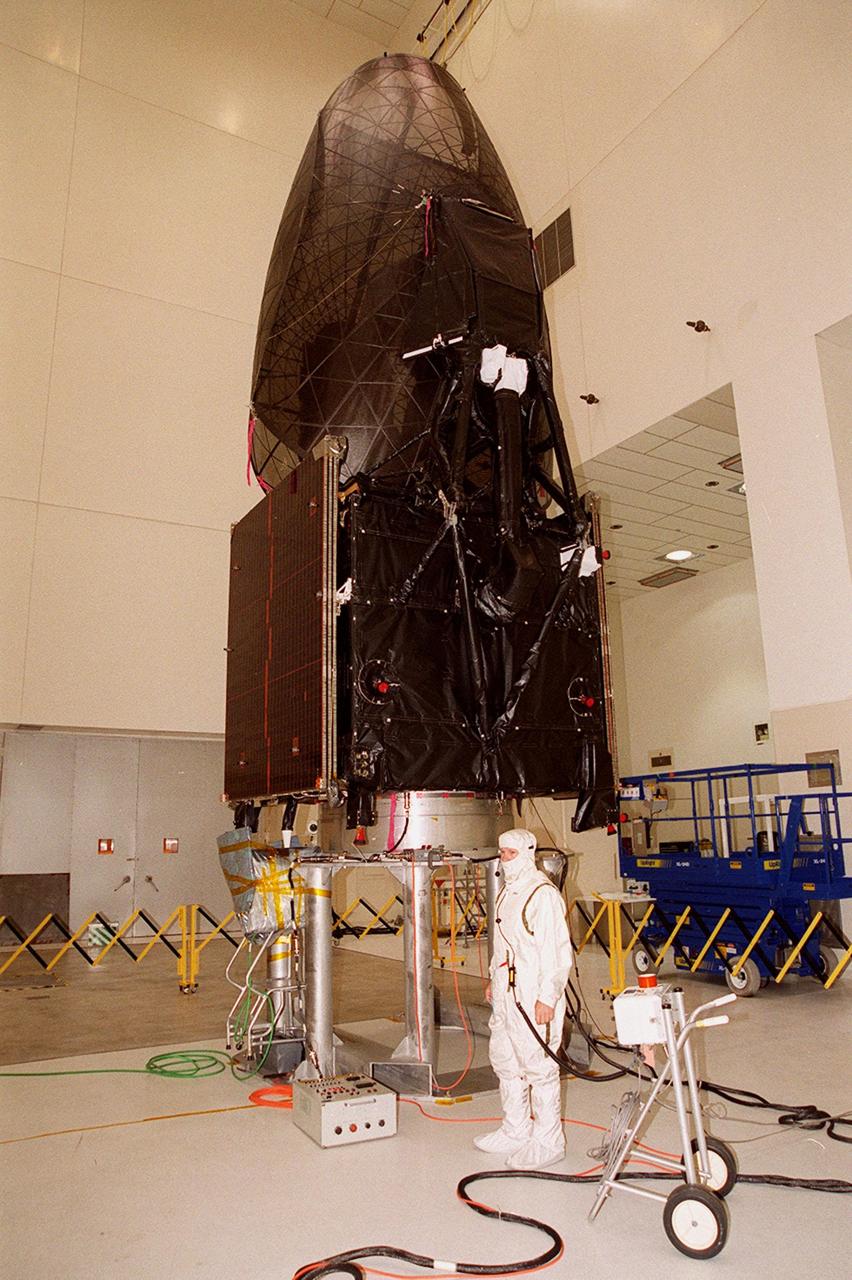
An unmodified phone transmits a fraction of a watt from a hand-sized antenna. Closing that link from hundreds of kilometers up is a link-budget problem, and AST’s answer is aperture: Block 2 BlueBird arrays span roughly 2,400 square feet — the largest commercial communications arrays ever deployed in LEO — collecting and focusing signal no conventional satellite could. Company expectations put peak data rates beyond 120 Mbps per beam on the Block 2 generation, delivered on the partner carriers’ own licensed spectrum so that phones connect as if to a distant tower. That per-beam figure is the one to hold onto: it is what separates broadband-class D2D from the messaging-grade services that defined the category’s first commercial wave.
The engineering trade is deliberate: fewer, larger, more capable satellites rather than the thousands-of-small-nodes approach. It concentrates capability — and concentrates risk, as the April 2026 loss of BlueBird 7 to a New Glenn upper-stage failure demonstrated: when your constellation is counted in tens, every launch carries percentage points of the company. [INTERNAL LINK: direct to device satellite technology → how D2D link budgets work and who leads]
The Constellation: Ten Satellites and a Steep Year
As of mid-June 2026 the company operates 10 Block-series satellites, after BlueBirds 8, 9 and 10 reached orbit on a Falcon 9 in June and BlueBird 6 — deployed in December 2025 — completed the largest array unfolding in commercial history. The stated goal: 45 to 60 satellites by the end of 2026, the fleet size at which nationwide intermittent US service becomes continuous-enough coverage across key markets, with activations planned for the US, Canada, Japan, Saudi Arabia and the United Kingdom.
The gap between 10 and 45–60 is the year’s entire story. Bridging it requires a manufacturing cadence AST has never sustained and a launch manifest spread across providers — including the New Glenn vehicle that already cost it one satellite. The company’s Texas facilities were built for exactly this ramp; 2026 is the year the assembly line either proves out or becomes the bear case.
Launch Diversity After BlueBird 7
The April failure clarified a structural discomfort: AST’s manifest spans multiple providers — Falcon 9 flew the June trio, New Glenn carried the lost satellite, and additional vehicles hold future slots — which diversifies schedule risk while guaranteeing that some of the company’s most critical hardware flies on its chief competitor’s rockets. There is no better option; there is also no pretending it is a comfortable one. Each Block 2 satellite is large enough that manifest slots are scarce, launch insurance is material to unit economics, and a second failure in 2026 would put the year-end target formally out of reach.
The Business Model: Renting Three Billion Subscribers
AST sells no consumer service and needs no retail machine. Its distribution is the partner roster: more than 50 mobile network operators with reach into nearly 3 billion subscribers — AT&T and Verizon in the US, Vodafone and Rakuten as long-standing strategic partners, and 2026 additions including Orange, Telefónica, CK Hutchison, Taiwan Mobile and Sunrise. Carriers pay through revenue-sharing arrangements and, increasingly, prepaid commitments; subscribers see a coverage feature on their existing bill.
Government demand arrived as the second revenue leg: a 10-year agreement with OSTC Group covering Saudi Arabia and regional MENA markets carried a $175 million prepayment — the kind of contract that converts constellation capacity into balance-sheet strength before consumer activations scale. Aggregate contracted commitments now exceed $1.2 billion, which is the number that separates AST from every D2D concept that never found a paying customer.
The Spectrum Position
Carrier spectrum is the model’s foundation, but AST has quietly hedged it: the company holds long-term access arrangements to lower-band mobile-satellite spectrum of its own, usable for service continuity and premium capacity independent of any single carrier deal. The hedge matters strategically after SpaceX’s EchoStar purchase re-priced what owned spectrum is worth in this market — a pure partnership model looks more fragile in a world where the biggest competitor just spent $17 billion to stop depending on partners.
AST SpaceMobile Direct to Cell: The Viability Math
| Metric (2026) | Figure | Source |
|---|---|---|
| Revenue guidance | $150–200M | Company guidance, reaffirmed Q1 |
| Contracted commitments | $1.2B+ | Company disclosures |
| Operational satellites | 10 (mid-June) | Launch records |
| Year-end target | 45–60 satellites | Company guidance |
| US regulatory status | Commercial operation approved (April) | FCC |
| Carrier partners / reach | 50+ MNOs / ~3B subscribers | Company disclosures |
| Peak data rate (Block 2) | >120 Mbps expected | Company statements |
Read the table as a dependency chain: the revenue guidance depends on activations, activations depend on the constellation ramp, and the ramp depends on manufacturing and launch execution. What makes 2026 different from every prior AST year is that the demand side is no longer hypothetical — the backlog exists, the approvals exist, and the remaining variables are industrial, not commercial.
The guidance construction itself is telling: roughly half of the $150–200 million is expected from existing contracted backlog — government and gateway commitments that pay regardless of consumer uptake — which means the market’s real scrutiny lands on the other half, the portion that requires carrier activations to perform on schedule. A company that hits the low end on backlog alone tells one story; one that hits the high end on activation revenue tells a far more valuable one.
Risks: Cadence, Capital, and the Spectrum-Owning Rival
Three honest risks order the bear case. Manufacturing cadence first: the 45–60 target implies a satellite completion rate the company has never demonstrated, with launch slots it does not control. Capital second: giant satellites are expensive, the company’s history includes repeated dilutive raises, and the buildout continues to consume cash faster than early revenue replaces it — backlog softens but does not remove that math. The equity market’s enthusiasm has been a genuine strategic asset here, funding the ramp on favorable terms; it is also a dependency, and sentiment-funded capex plans deserve to be stress-tested against a colder tape.
Competition third, and sharpest: SpaceX’s $17 billion EchoStar spectrum acquisition rearms Starlink’s direct-to-cell business with owned mobile frequencies and testing planned from late 2026 — a rival attacking the same phones with its own launch capacity, its own spectrum and ten thousand satellites of infrastructure behind it. AST’s counter is real but must be executed: carrier alignment (operators prefer a partner that does not compete with them for subscribers), broadband-class per-beam performance, and the neutrality that makes it every carrier’s ally rather than any carrier’s threat. If the 45–60 target lands and activations perform, 2026 will be remembered as the year the pure play graduated; if not, as the year the window narrowed. [INTERNAL LINK: SpaceX Starlink constellation analysis → the incumbent’s D2C flank]
Industry Implications
For mobile operators: the D2D partner map is being drawn now, and AST’s carrier-friendly model is the alternative to renting coverage from a company that also sells against you. Operators still unsigned should price that difference before the exclusivities do.
For competitors: AST’s $1.2B backlog proves D2D demand is contractable, not just demonstrable — expect the wholesale operators and the Chinese bloc to chase the same government-prepayment template.
For investors: this is execution-phase now — track satellites completed per quarter, backlog conversion into recognized revenue, and dilution cadence. The story stock era ends when the assembly line becomes the only chart that matters.
For regulators: the April approval set the template for D2D authorization on carrier spectrum; the open questions — interference protection, service-quality claims, emergency-service obligations — arrive with scale.
What to Watch
- ☐ Satellite completion and launch cadence against the 45–60 year-end target — the single viability metric
- ☐ First commercial activations in the US, Canada, Japan, Saudi Arabia and UK — service quality at launch sets the narrative
- ☐ Q2/Q3 earnings: backlog conversion into recognized revenue against the $150–200M guidance
- ☐ New Glenn return-to-flight and AST’s manifest allocation after the April loss
- ☐ Starlink D2C testing on acquired EchoStar spectrum from late 2026 — the competitive clock
Frequently Asked Questions
Does AST SpaceMobile work with regular phones?
Yes — that is the entire design thesis. BlueBird satellites communicate with unmodified smartphones on partner carriers’ licensed spectrum, using orbital arrays around 2,400 square feet to close the link that ordinary satellites cannot. No app, no special hardware, no user action.
How does AST SpaceMobile make money?
Through the carriers: revenue-sharing and prepaid capacity agreements with 50+ mobile network operators (AT&T, Verizon, Vodafone, Rakuten among them) plus government contracts — including a 10-year MENA agreement with a $175 million prepayment. 2026 guidance is $150–200 million against $1.2 billion in contracted commitments.
How many satellites does AST SpaceMobile need for continuous service?
The company targets 45–60 satellites by end-2026 for substantially continuous service in priority markets; 10 Block-series satellites operate today, supporting intermittent nationwide US coverage. Full global continuous service requires a larger fleet in later phases.
Is AST SpaceMobile profitable?
No — 2026 is its first meaningful revenue year, and constellation capex continues to exceed early revenue. The investment case rests on backlog conversion and the operating leverage of a fleet whose customers (carriers and governments) sign multi-year committed contracts.
How does AST compare to Starlink’s direct-to-cell service?
Opposite architectures: AST flies few giant satellites and partners with carriers on their spectrum; Starlink flies thousands of satellites and, after its $17B EchoStar spectrum purchase, increasingly controls its own frequencies. AST offers carriers alignment; Starlink offers scale. The next two years test which advantage compounds faster.
Data Sources
- AST SpaceMobile Q1 2026 disclosures, guidance and 8-K filings; FCC commercial-operation approval records (April 2026)
- Launch records (Block 1 September 2024; BlueBird 6 December 2025; BlueBirds 8–10 June 2026; BlueBird 7 loss April 2026)
- Company partnership announcements, 2024–July 2026
Figures dated July 2026; peak data rates and coverage timelines are company expectations, not measured service levels.